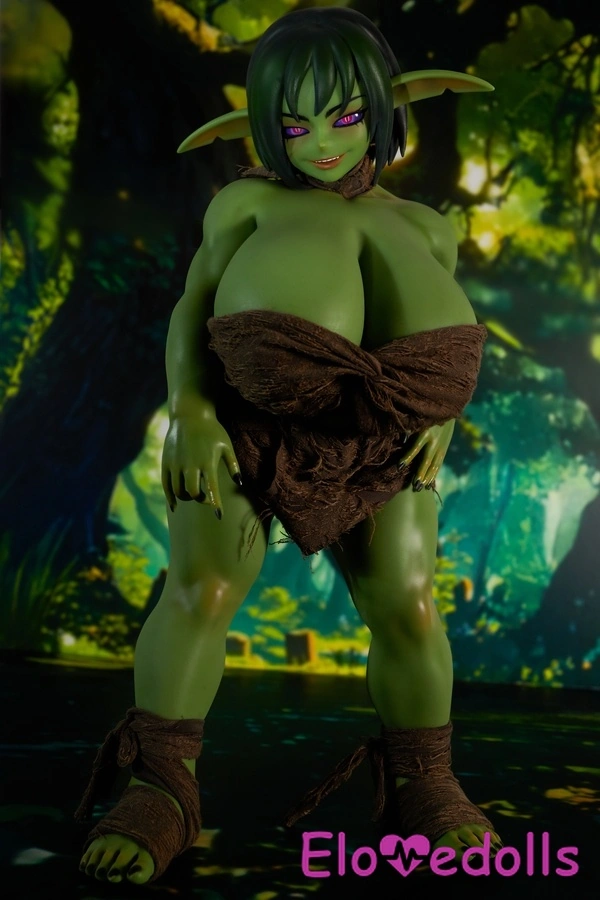
1. The Engineering of Fantasy: Bridging Biology and Synthetic Desire
The creation of a high-fidelity anthropomorphic companion represents a collision of distinct disciplines that rarely intersect: evolutionary biology, heavy industrial engineering, anthropomorphic robotics, and the nuanced artistry of erotic sculpture. At ELOVEDOLLS, the mission transcends the mere casting of thermoplastic elastomer (TPE) into pleasing shapes. The objective is the fabrication of a presence—an entity that occupies physical space with the weight, posture, and biomechanical authority of a living creature. This is the "Engineering of Fantasy," a discipline where the "geeky" obsession with anatomical correctness serves the "sexy" imperative of immersion.
The target demographic for custom furry anatomy is discerning. These are enthusiasts who have spent decades analyzing the gait of digitigrade creatures in animation, art, and biology. They do not merely want a doll that looks like a wolf or a feline; they demand a furry sex doll that stands like one. They require a skeletal architecture that mimics the potential energy of a crouched predator, yet possesses the stability to serve as a passive partner or an artistic mannequin. The failure mode of the industry has historically been the "man in a suit" aesthetic—a human frame clumsily draped in fur textures, lacking the radical skeletal restructuring necessary to sell the illusion of a different species.
To escape this uncanny valley, we must strip the design back to the bone. We are not modifying human dolls; we are synthesizing a new cladistic branch of mammalian anatomy. We are engineering the "Anthropo-Synthetic," a hybrid organism that must obey the laws of physics (gravity, torque, friction) while fulfilling the limitless demands of fantasy. This report dissects the technical hurdles of this process, moving from the ground reaction forces of the digitigrade foot to the optical physics of the "follow-me" eye, providing a comprehensive blueprint for the next generation of ELOVEDOLLS.
1.1 The Theoretical Basis of Anthropomorphic Attraction
To engineer the perfect doll, one must understand the user's psychological requirement. The appeal of the anthropomorphic form lies in its combination of human emotional cues (binocular vision, expressive hands, secondary sexual characteristics) with animalistic vitality (digitigrade posture, tails, fur texture). The "Geeky but Sexy" tone we strive for is essentially a celebration of this hybrid vigor. The "geeky" aspect appreciates the complex mechanics of a multi-jointed hock or a cable-driven tail; the "sexy" aspect appreciates the resulting silhouette—the elongated leg, the raised calf, the lordotic curve of the spine accentuated by the tail's counter-balance.
When a customer commissions a custom digitigrade model, they are implicitly asking for a simulation of cursorial adaptation—bodies built for speed and power. The engineering challenge is that while biological cursorial animals are constantly moving (using muscle firing to maintain balance), a sex doll is a static object that must maintain these high-energy poses without collapsing under its own 40kg deadweight. We are essentially building a statue that is soft to the touch and fully articulated, a paradox that requires high-torque solutions borrowed from industrial robotics rather than traditional doll manufacturing.

Fig. 1: X-ray style cutaway shows 7075 aluminum limb bones and 304 steel spine distributing 80 Nm torque while the articulated sex doll tail provides tripod stability.
2. Digitigrade Leg Mechanics: Biomechanics & Engineering
The leg is the foundation of the furry aesthetic. It is the primary differentiator between a "human with ears" and a true anthropomorphic creature. Biologically, the distinction lies in which bones contact the substrate (ground), and our designs simulate animalistic gait simulation through engineered leverage.
2.1 The Three-Tiered Hierarchy of Foot Posture
Mammalian locomotion is broadly categorized into three tiers, each presenting unique engineering challenges for a TPE doll.
| Posture Type |
Ground Contact Points |
Biological Examples |
Skeletal Characteristic |
Doll Engineering Implication |
| Plantigrade |
Phalanges & Metatarsals (Whole Foot) |
Humans, Bears, Raccoons, Primates |
Wrist/Ankle at ground level. Stable, high surface area. |
Standard doll skeleton; high stability; low joint torque in standing. The center of pressure (CoP) is easily maintained within the large base of support. |
| Digitigrade |
Phalanges (Toes & Pads) only |
Canines, Felines, Dinosaurs |
Wrist/Ankle elevated. "Backwards knee" illusion (actually the ankle/hock). |
Requires reinforced ankle joints; shifted Center of Mass (CoM); high torque on the knee due to permanent flexion. |
| Unguligrade |
Distal Phalanx (Hoof tip) |
Horses, Deer, Cattle |
Maximum limb length; fusion of metapodials (cannon bone). |
Extreme instability in static dolls; requires base stands or locking mechanisms due to minimal ground contact area. |
For ELOVEDOLLS, the digitigrade stance is the gold standard for furry sex dolls. It creates a visual impression of kinetic potential. The heel is elevated, elongating the effective length of the leg and adding an extra lever arm to the limb's movement chain. This adaptation, evolved for running efficiency in wolves and cheetahs, becomes an engineering nightmare when applied to a heavy, passive sex doll.
2.2 The "Backwards Knee" Fallacy and Skeletal Correction
A persistent error in amateur art and low-quality manufacturing is the misconception that digitigrade animals possess "backwards knees". This is a visual misinterpretation of the anatomy. All tetrapods share the same basic limb joints: Hip, Knee, Ankle, Toe.
- The Knee (Stifle): Always bends forward (anteriorly), just like a human knee. In digitigrade animals, the femur is shorter and the knee is held high against the flank, often obscured by the skin fold of the abdomen.
- The Ankle (Hock): Bends backward (posteriorly). In digitigrade animals, the ankle is elevated high off the ground. The "shin" is the Tibia/Fibula, and the "lower leg" visible below the backward-bending joint is actually the Metatarsus (foot bones).
⚠ Engineering Implication: If a manufacturer attempts to build a digitigrade furry doll by simply inverting the knee joint of a standard human skeleton, the result is the "Z-leg" or "broken tibia" look. This creates a mechanically unsound structure where the stress vectors do not align with the joint's axis of rotation.
To achieve a correct digitigrade build for ELOVEDOLLS furry sex dolls, we must manufacture a custom skeleton where:
- The Tibia is Shortened: Relative to a human proportion.
- The Metatarsals are Elongated: They must be machined as heavy-duty load-bearing rods, not delicate foot plates.
- The Ankle Joint is Reinforced: It becomes a primary weight-bearing knee-equivalent, supporting the entire torso weight on a lever arm.
2.2.1 The "Drumstick" Aesthetic Problem and Muscle Simulation
In standard human anatomy, the calf muscles (gastrocnemius and soleus) taper down to the calcaneus (heel) at the floor. In a digitigrade configuration, evolution has moved the muscle mass proximally (closer to the body) to reduce the moment of inertia of the limb, allowing for faster swinging during running.
For the doll sculptor, this dictates that the "calf" volume must be concentrated high, just below the true knee, tapering rapidly into a long, elegant Achilles tendon that runs the length of the tibia to the elevated hock. The "Man in a Suit" failure occurs when the sculptor leaves the human calf mass low on the leg but stands the furry doll on its toes. This results in a heavy, clunky lower limb that lacks the grace of a feline form.
Manufacturing Insight: The internal steel armature must match this taper. We cannot use uniform diameter pipe. The tibial section of the skeleton should use a thinner, high-strength alloy (like 7075 Aluminum) to allow for the thin tendon simulation in the TPE, while the metatarsal section must be robust enough to act as the new "lower leg". This reinforces the furry doll skeleton so the legs carry load while preserving an animalistic gait simulation.
2.3 Physics of the Crouch: Torque and Moment Arms
The primary enemy of the digitigrade furry sex doll is gravity acting upon a flexed joint. A human (plantigrade) skeleton locks into a vertical column where the weight is supported directly through the bones (femur → tibia → talus) in a straight line. This "bone locking" requires minimal muscular energy or joint friction to remain upright.
A digitigrade stance is, by definition, a "permanent crouch". The knee is always bent; the ankle is always flexed.
The Moment Arm Crisis: In biomechanics, a moment arm is the perpendicular distance from the line of force (gravity acting on the CoM) to the axis of rotation (the joint). Managing this with a high-torque joint mechanism is essential for stable posing.
- Plantigrade: The line of gravity passes through the joint centers. Moment arm ≈ 0. Torque ≈ 0.
- Digitigrade: The knee is projected forward. The line of gravity falls significantly behind the knee. The ankle is projected backward; gravity falls in front of it.
Mathematical Reality:
For a TPE doll weighing 40kg (approx 400N), standing with a knee flexion of 45 degrees, the moment arm might be 0.2 meters.
Torque = Force × Moment Arm
Torque = 400N × 0.2m = 80 Nm
Standard friction joints used in the sex doll industry are typically tightened to withstand 10-20 Nm of torque before slipping. Under the 80 Nm load of a digitigrade stance, a standard joint will fail instantly, causing the furry doll to collapse into a pile of expensive silicone.
The ELOVEDOLLS Solution:
We cannot rely on simple bolt tension. We must implement High-Torque Friction Hinges or Locking Splines.
- Friction Hinges: Utilizing technology from industrial lid supports, we can use sintered metal plates that provide >50 Nm of holding torque.
- Spline/Rosette Locks: For absolute stability, we use toothed gears (rosettes) at the knee and hock. These interlock physically. While this sacrifices infinite adjustability (limiting poses to 10-degree increments), it guarantees that the doll cannot fall, regardless of the leverage.
2.4 The Uncanny Valley of Locomotion
The analysis of the Patterson-Gimlin film (Bigfoot) provides a cautionary tale for doll design. Skeptics identify the subject as a "man in a suit" because the gait is compliant with human biomechanics—the heel strikes the ground. Believers argue the "compliant gait" (bent knee walking) is distinct.
For our furry sex dolls, we must avoid the "man in a suit" look by ensuring the Metatarsal-Phalangeal Joint (the toes) is the only point of pivot. The hock must remain rigid during the "stance phase" of posing. If the hock looks like it's collapsing or if the heel pad touches the ground, the illusion of the digitigrade creature is broken. The doll simply looks like a human standing on tiptoes, which is structurally weak and aesthetically disappointing.
Comparative Analysis: Standard vs. Engineered Digitigrade Systems
| Spec |
Standard Market Dolls |
ELOVEDOLLS Engineering |
| Joint Torque |
15-20 Nm (prone to collapse) |
80 Nm+ high-torque friction and locking splines |
| Skeleton Material |
Mild Steel (heavy, rust-prone) |
7075 Aviation Aluminum + 304 Steel spine |
| Standing Stability |
Requires external stand; limited balance |
Self-balancing with tripod stability using tail and toes |
| Tail Integration |
Surface attachment; non-structural |
Sacral spine fusion; structural articulated sex doll tails |
| Lifespan |
2-3 years under light posing |
10+ years serviceable; engineered for suspension bondage stability |
5 Critical Features to Check Before Buying a Digitigrade Doll
- Verify joint torque rating (80 Nm+). Anything lower will not hold a permanent crouch or a cautious one-leg pose.
- Confirm skeleton materials: 7075 Aluminum limbs + 304 Steel spine for balanced CoG and reduced dead weight.
- Inspect tail integration: structural, replaceable tail systems with sacral fusion—not surface attachments.
- Ask for custom fursona manufacturing options: Pantone color matching for fur, follow-me eyes, and matched paw pad tones to prevent TPE tearing at the knee.
- Check support accessories: heavy duty doll stand compatibility, locking mechanism engagement points, and availability of a skeleton repair guide or service program.
3. The Ghost in the Shell: Skeletal Engineering and Material Science
The internal armature—the "Ghost in the Shell"—is the single most critical component of a high-end furry sex doll. In standard dolls, the skeleton is a passive hanger for the TPE flesh. In an ELOVEDOLLS digitigrade model, the skeleton is an active mechanical linkage under constant stress.
3.1 Material Selection: The Metallurgy of Curves
Standard sex doll skeletons utilize mild steel rectangular tubing (Q235 grade) for the spine and limbs. This is heavy and prone to rusting if the TPE oil barrier is breached. For a digitigrade build, weight distribution is critical. A top-heavy furry doll on tip-toes is a tipping hazard.
- Spine & Pelvis (Stainless Steel 304): We retain steel for the core trunk to provide a low center of gravity (CoG). The pelvic weldment must be reinforced to accept the high-leverage loads of the tail and legs.
- Limbs (Aviation Aluminum 7075-T6): The femur, tibia, and metatarsals should be machined from 7075 Aluminum high-strength alloy reference. This alloy offers the tensile strength of steel at one-third the weight. Reducing the mass of the upper legs reduces the torque load on the hips, making the doll easier to pose and less likely to topple.
- Joint Cups (POM/Acetal): To prevent the "squeak" of metal-on-metal—a fantasy killer—we use Polyoxymethylene (POM) liners in the ball sockets. POM is self-lubricating and highly wear-resistant, ensuring silent operation during intimate use.
3.2 Joint Mechanics: The Shift to Industrial Robotics
The "standing" requirement of the digitigrade furry sex doll forces us to abandon the standard ball-and-socket joint for the lower limbs. Ball joints rely on omnidirectional friction, which is inefficient for resisting the unidirectional force of gravity in a squat.
- Hinge Joints for Knees/Hocks: We replace the ball joint with a single-axis clevis hinge for the knee and hock. This restricts rotation to the sagittal plane (forward/backward), which mimics biological constraints (knees don't rotate sideways).
- Torque Specification: Based on the biomechanical calculations (Section 2.3), the knee hinge must be rated for 80 Nm static load. We source Constant Torque Hinges used in heavy medical monitor arms. These hinges use a wrap-around spring friction mechanism that provides smooth resistance without the "stick-slip" behavior of bolted joints.
- Locking Mechanisms: For larger dolls (160cm+), friction is insufficient. We integrate a spring-loaded pin lock. The user presses a button behind the knee to disengage the lock, bends the leg to the desired angle, and releases the button to engage a pin into a locking plate. This provides absolute rigidity for standing poses.
Longevity Insight: High-torque joints with POM liners are engineered for 10+ years of posing life under regular use. Unlike older metal-on-metal hinges that needed oiling, these self-lubricating interfaces maintain friction without user maintenance, even when users explore dynamic poses like one-leg stands or careful suspension bondage stability setups.
3.3 Center of Pressure (CoP) vs. Center of Mass (CoM)
The stability of any bipedal robot or doll is defined by the relationship between the Center of Mass (CoM) and the Center of Pressure (CoP).
- CoM: The average position of the doll's weight (usually the chest/hips).
- CoP: The weighted average of the forces applied to the ground (the feet).
The Problem: A human plantigrade foot has a large CoP area (heel to toe). A digitigrade foot has a tiny CoP area (toes only). If the vertical projection of the CoM leaves the CoP area, the furry doll falls.
Engineering Solutions:
- Weighted Metatarsals: We cast Lead or Tungsten weights into the foot structure of the skeleton. This lowers the overall CoM of the doll, acting like a ship's keel. A lower CoM requires a greater tilt angle to topple.
- Splayed Toes: We design the foot armature with widely splayed digits (like a bird or dinosaur). This increases the lateral surface area of the CoP.
- The "Third Leg" Principle: The tail is not just aesthetic. By designing the tail to be structural (see Section 4), it can act as a "third leg," creating a tripod stance. A tripod is geometrically the most stable structure. The tail armature must be stiff enough to bear weight, effectively expanding the BoS (Base of Support) to include the tail tip in furry sex dolls.
3.4 Skeletal Integration with Soft Body
A critical point of failure in "custom anatomy" furry dolls is the delamination of the TPE from the skeleton. In high-stress areas like the extended hock, the TPE is stretched thin. If the skeleton is just a bare metal rod, the TPE will slide over it, creating unsightly wrinkles and eventually tearing.
- Surface Keying: The metal bones must be sandblasted or wrapped in a fibrous bonding tape to create a mechanical key for the TPE.
- Variable Density Padding: We apply layers of varying density foam or silicone between the bone and the skin. A dense Shore A30 silicone layer mimics the deep muscle (gastrocnemius), while the outer TPE mimics the skin and fat. This creates a "subsurface firmness" that feels like a real limb, rather than a soft bag of jelly over a pipe.
4. Articulated Tail Systems: Mechanics & Movement
In the furry fandom, the tail is an expressive organ. It communicates mood, balance, and arousal. A limp, stuffed tail is unacceptable in a premium furry sex doll; it transforms a living character into a plush toy. ELOVEDOLLS must implement animatronic-grade armature systems to allow for dynamic posing and interaction.
4.1 Vertebral Emulation: The Ball-and-Socket Spine
The industry standard for poseable tails is the modular plastic or metal ball-and-socket armature, often referred to as "loc-line" or "jeton" style.
- Structure: A series of interlocking segments, each providing ~20 degrees of rotation. When linked in a chain of 50 segments, this creates a fluid, organic curve.
- Tapering: Biological tails taper. A uniform armature looks like a snake in a tube. We must step down the armature size: 25mm joints at the base (sacrum), 16mm in the mid-section, and 9mm at the tip. This ensures the tail bends more at the tip than the base, mimicking the behavior of a real vertebral column.
- Friction Tuning: The joints near the base must have higher friction (tighter fit) to support the weight of the entire tail lever arm.
4.2 Anchoring: The Sacral Fusion
A heavy, 1.5-meter silicone tail exerts massive leverage on the attachment point. A common defect is attaching the tail armature only to the soft TPE of the buttocks. This causes the tail to sag, tear the TPE, or flop around uselessly.
The Engineering Fix: The tail armature must thread directly into a welded receiver on the steel pelvic plate. This simulates the biological fusion of the sacral vertebrae. The tail effectively becomes an extension of the spine in furry sex dolls.
Load Transfer: By anchoring to the pelvis, the weight of the tail pulls on the steel skeleton, not the soft skin. This allows the tail to be used as a handle or a counterbalance without damaging the furry doll.
4.3 Advanced Mechanisms: Cable-Driven Systems
For the "Ultra-Premium" tier, we can integrate cable-driven mechanisms derived from film animatronics.
- Mechanism: Steel Bowden cables run through guides on the vertebrae segments (the "transverse processes").
- Actuation: A rotary dial or slider is hidden at the base of the spine (under the fur).
- The "S-Curve": By utilizing two opposing cables (antagonistic pairs), the user can create complex S-curves or tight curls that a simple wire armature cannot achieve. Tensioning the cable locks the tail in a rigid pose that can support significant weight, then releasing the tension allows it to sway naturally. This mimics the "tendon-driven" nature of biological tails.
5. Head Sculpting Nuances: The Engineering of Aesthetics
The head is where the "sexy" meets the "species." Sculpting an anthropomorphic face is a minefield of cognitive dissonance. If the proportions are too human, it looks like a person in makeup (uncanny). If they are too animal, it triggers bestiality taboos or looks like taxidermy. The goal is the "Disney/Anime" sweet spot—high expression, neoteny (big eyes), and human-readable emotion in furry sex dolls.
5.1 Cranial Morphometrics: The Muzzle-to-Eye Ratio
The challenge is hybridizing the prognathism (muzzle) of a carnivore with the flat facial plane of a human.
- The Stop: In canine anatomy, the "stop" is the angle where the muzzle meets the forehead. A deep, 90-degree stop is essential for the "cute/sexy" aesthetic (think anime characters). A shallow, sloping stop (like a bull terrier) looks aggressive and alien.
- Binocular Vision: Animals typically have side-facing eyes (monocular vision). Humans have forward-facing eyes (binocular). A furry sex doll must have forward-facing eyes to allow for eye contact during intimacy. The convergence angle must be set for a focal distance of ~30-50cm (intimate distance).
- The Jaw Mechanics: The jaw must be articulated for oral use. However, a long muzzle creates a long lever arm. The jaw hinge must be reinforced with a stiff spring (high K-value) or a ratcheting mechanism to prevent the mouth from hanging open under the weight of the silicone snout.
5.2 The "Follow-Me" Eye Illusion
A signature feature of high-quality fursuits and dolls is the "follow-me" eye—eyes that seem to track the viewer across the room. This is not electronic tracking; it is an optical illusion.
- Mechanism: The "Hollow-Face" illusion. Instead of a convex (bulging) eyeball, the iris and pupil are set deep into a concave (dished-in) socket.
- The Optics: A clear glass or acrylic dome is placed over the concave iris. As the viewer moves to the left, the refraction of the dome combined with the recessed depth of the pupil creates a parallax error. The pupil appears to shift to look at the viewer.
- Material Science: We must use Optical Grade Glass or UV-Resistant Urethane for the eyes. Acrylic scratches easily and lacks the refractive index to sell the "wet" look of a living eye. Glass eyes have a "sparkle" and depth that resin cannot match, catching the light in a way that suggests consciousness.
5.3 The Uncanny Valley and Texture Mapping
The "Uncanny Valley" describes the revulsion felt when a simulation is close to human but "off". In furry sex dolls, a smooth human skin texture painted with tiger stripes looks like a body-painted human—it fails the fantasy test.
Solution: The mold must have micro-texturing. Even if the doll is made of silicone, the surface should have a subtle relief map of fur directionality. This breaks up the specular highlights. When light hits the skin, it shouldn't shine like a balloon; it should scatter, suggesting a velvety, peach-fuzz texture (velus hair). This tactile and visual cue bridges the gap between skin and fur, while custom TPE casting preserves color fidelity and durability.
User Guide: Posing Best Practices for High-Torque Limbs
- Shift the Center of Gravity (CoG) over the toes and tail tip to create tripod stability before releasing your hands.
- Engage the locking mechanism behind the knee for long-hold poses; disengage gently before changing angles to avoid fighting the hinge.
- Use the articulated sex doll tail as a counterbalance for dynamic poses like subtle leans or one-leg stances; keep the tail angled down to widen the Base of Support.
- Avoid forcing rotation against the intended hinge axis; always follow the friction hinge direction to protect POM liners and maintain lifespan.
- For aerial or suspension-inspired photography, distribute load through the pelvis and tail anchor points rather than pulling on the distal limb ends.
6. Manufacturing & Assembly: The Alchemy of TPE
The assembly of a digitigrade furry sex doll is significantly more complex than a standard human doll.
6.1 The "Reverse-Dip" Casting Process
Standard dolls are often cast in a single pour. For digitigrade legs, the complex internal armature creates "shadows" where the liquid TPE might not flow, creating air pockets.
- Technique: We employ a multi-stage injection process.
- Pre-Encapsulation: The intricate metal joints (knees, hocks) are pre-encapsulated in a high-density silicone foam. This protects the TPE from the sharp edges of the mechanism and ensures the joint volume is filled.
- Vertical Injection: The mold is filled from the toes up to prevent air entrapment in the complex foot geometry.
- Vacuum Degassing: The entire mold is vibrated under vacuum to pull bubbles out of the detailed toe beans and claw sheaths.
6.2 Pad and Claw Integration
The pads (beans) and claws are separate materials.
- Claws: Made of hard resin or ABS plastic. They must be mechanically keyed into the toe armature so they don't pull out.
- Pads: We use a dual-shore silicone for the pads. A Shore A05 (very soft) outer layer for squishiness, bonded to a Shore A30 inner core for durability. This mimics the biological "fat pad" structure of a real paw.
- Traction Control: The bottom of the pads must be treated with a high-friction coating. TPE is naturally oily and slippery. Without this coating, a digitigrade furry sex doll (which relies on friction for stability) will slide and fall on hard floors.
7. Future Outlook: Robotics and Active Stabilization
The current generation of dolls is passive. The future is active.
- Active Balancing: We are investigating the integration of Control Moment Gyroscopes (CMG) in the pelvic cavity. A spinning flywheel can generate torque to resist tipping. This would allow the furry sex doll to hold precarious poses (like standing on one leg) that are statically impossible, correcting for minor imbalances automatically.
- Sensory Feedback: Embedding pressure sensors in the footpads could signal a micro-controller to stiffen the knee joints (via magnetic fluid dampers) when the furry doll detects it is leaning, effectively giving the doll a "reflex" to lock its legs and prevent a fall.
8. Conclusion: The Art of Mechanical Life
The creation of an ELOVEDOLLS digitigrade furry sex doll model is a triumph of interdisciplinary engineering. It requires us to calculate the torque of a phantom limb, to sculpt the gaze of a predator that never existed, and to cast soft flesh over a machine designed to fight gravity.
By rejecting the "man in a suit" shortcuts and embracing the radical structural requirements of the digitigrade stance—the high-torque joints, the counter-balanced tail, the weighted metatarsals—we deliver more than a product. We deliver a physical manifestation of the user's fantasy. It is a creature that stands on its own toes, looks back with depth-filled eyes, and invites the user to touch a world that, until now, existed only in pixels and ink. This is the definition of "Geeky but Sexy": the uncompromising application of hard science to the softest of arts in furry sex dolls, powered by our Advanced Digitigrade Engineering System showcased across our Furry Sex Doll Collection.
9. Appendix: Technical Specifications for Production
9.1 Recommended Joint Specifications
| Joint Location |
Motion Type |
Required Torque (Static) |
Mechanism Type |
Material |
| Hip |
3-Axis Ball / Hinge |
120 Nm |
Dual-Axis Friction Hinge + Ball |
304 Steel / POM Liner |
| Knee (Stifle) |
1-Axis Hinge |
80 Nm |
Rosette Lock / Spline Gear |
Chromoly Steel (4140) |
| Ankle (Hock) |
1-Axis Hinge |
60 Nm |
Rosette Lock / Constant Torque Hinge |
Chromoly Steel (4140) |
| Toe (Metatarsal) |
1-Axis Hinge |
20 Nm |
Friction Hinge (Sintered) |
7075 Aluminum |
| Tail Base |
Multi-Axis |
15 Nm |
Ball-and-Socket (Tensioned) |
POM / Nylon 66 |
9.2 Material Density Table
| Component |
Material |
Density (g/cm³) |
Function |
| Skeleton Core |
Stainless Steel 304 |
8.0 |
Main structural mass, lowers CoG. |
| Limb Bones |
Aluminum 7075 |
2.8 |
Lightweight lever arms, reduces torque. |
| Skin/Flesh |
TPE (Thermoplastic Elastomer) |
0.9 |
Soft touch, variable density. |
| Paw Pads |
Silicone (Shore A10) |
1.1 |
High friction, soft tactility. |
| Foot Weights |
Lead / Tungsten |
11.3 / 19.3 |
Ballast for stability. |
People are also asking (FAQ)
What is a digitigrade sex doll?
A digitigrade furry sex doll features legs that stand on their toes (like canines and felines), rather than flat-footed like humans. This creates a more animalistic, anthropomorphic appearance with elevated heels and elongated legs, requiring specialized engineering to maintain stability.
Why do digitigrade dolls require special engineering?
Digitigrade furry sex dolls must maintain a permanent crouch position, creating high torque loads (up to 80 Nm) on knee and ankle joints. Standard sex doll joints can only handle 10-20 Nm, so specialized high-torque friction hinges or locking splines are required to prevent collapse.
How are articulated tails constructed?
Articulated tails in furry sex dolls use modular ball-and-socket armatures (similar to "loc-line" systems) with 50+ segments providing fluid curves. Premium models feature cable-driven mechanisms allowing complex S-curves. The tail must anchor directly to the steel pelvic plate, not just the TPE skin, to support weight.
What materials are used in digitigrade doll skeletons?
The spine and pelvis use Stainless Steel 304 for low center of gravity. Limbs use Aviation Aluminum 7075-T6 (one-third the weight of steel with equal strength). Joint cups use POM/Acetal for silent, self-lubricating operation in furry sex dolls.
Can digitigrade dolls stand without support?
Yes, with proper engineering. Solutions include weighted metatarsals (lowering center of mass), splayed toes (increasing base of support), and structural tails acting as a "third leg" for tripod stability in furry sex dolls. Larger dolls (160cm+) may require locking mechanisms for absolute rigidity.
Can I upgrade a standard doll to digitigrade legs later?
No. The internal pelvic weldment, tail receiver, and digitigrade limb geometry are fundamentally different and must be built into the custom skeleton from day one.
How do I maintain the friction joints over time?
The POM liners are self-lubricating and designed to be maintenance-free. Unlike older metal-on-metal joints that needed oil, these hinges retain smooth friction without user servicing.
Author name: Ava

Ava, Lead Biomechanical Engineer at ELOVEDOLLS, is a specialized engineer and researcher focused on furry sex doll biomechanics and anthropomorphic design. With extensive expertise in custom digitigrade leg engineering, articulated tail systems, and TPE manufacturing, Ava has dedicated years to perfecting the structural integrity and aesthetic authenticity of high-fidelity anthropomorphic companion dolls. Her work bridges evolutionary biology, industrial robotics, and material science to create furry sex dolls that stand, pose, and move with the biomechanical authority of living creatures. Through detailed analysis of torque calculations, skeletal engineering, and joint mechanics, Ava provides comprehensive technical guidance for enthusiasts seeking premium digitigrade furry dolls with articulated tails.